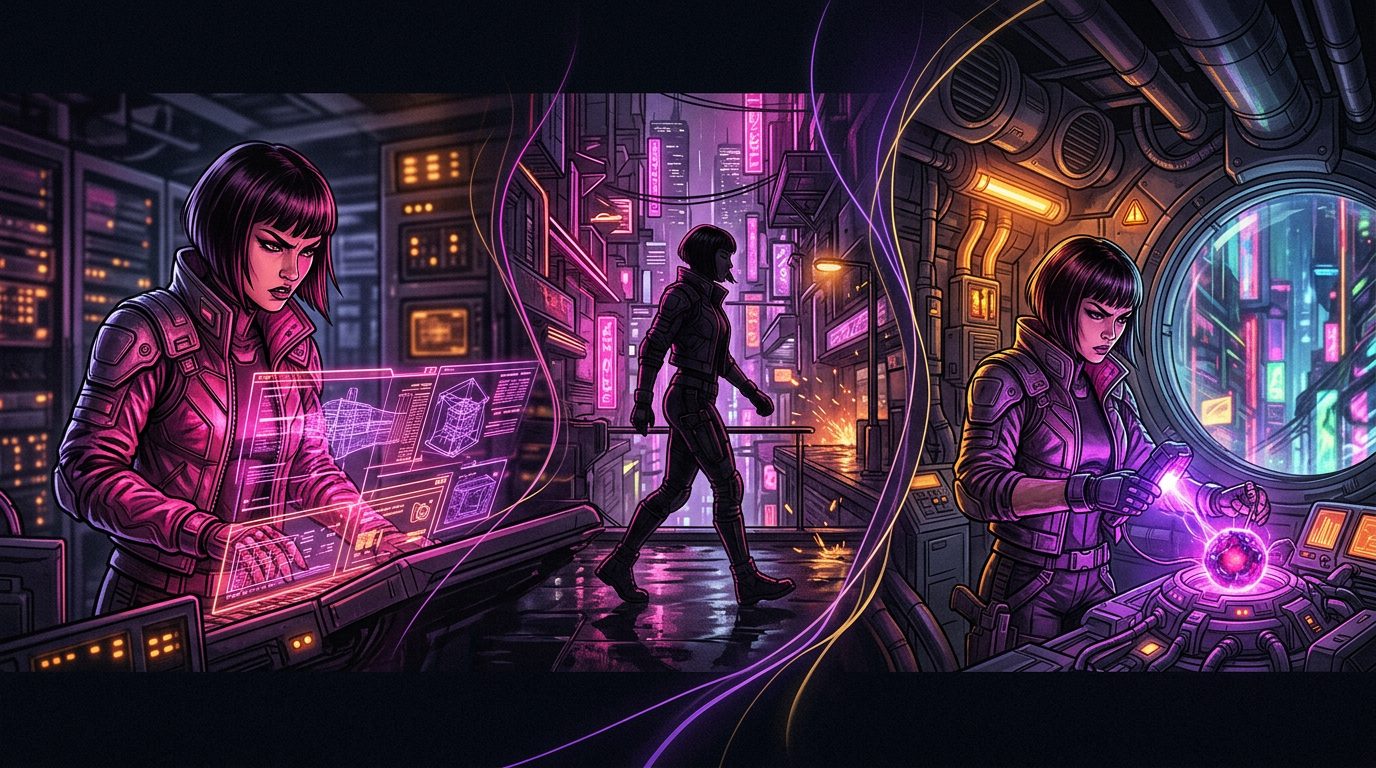
Why it's hard
Every generation is a fresh sample from a distribution. Without a strong anchor, the model reinterprets facial geometry, hair, skin tone and expression each roll. This is a feature of diffusion, not a bug — but it's what stops AI from doing narrative work at scale.
What actually works today
Three approaches, ranked by reliability:
- Reference images passed to the same model each shot (Flux, Nano Banana 2, Seedream all support this)
- Character LoRAs trained on 15-40 photos of a real or synthetic subject (Flux ecosystem, still gold standard)
- Image-to-video with the same hero frame animated multiple ways (works for single scenes, not narrative continuity)
The 2026 pro workflow for a mini-narrative
1. Generate one clean 3/4 portrait of your character in Flux 2 Pro. 2. Use that image as reference in every subsequent shot generation. 3. For each new scene, generate the hero frame with the reference, verify identity, then animate. 4. Colour-grade all clips to a single LUT in post to unify lighting drift. This produces ~90% consistency across a ten-shot sequence.
What still fails
Extreme angle changes (profile-to-back), dramatic age shifts within a scene, and dense group shots with the same character alongside others. Also, video models still drift more than image models — expect to re-generate one frame in three even with reference.
What's coming
Every major roadmap talks about persistent-character memory across a session. Nothing production-ready ships yet, but the gap between demos and reality is now measured in months rather than years.
Test character workflows
Put this into practice in the studio — under a minute to your first result.
Test character workflows →